
Saint Remigius: celebrated on January 13 (and October 1)
Remigius of Reims
Remigius of Reims (Laon, circa 437 – Reims, January 13, 533) was a Frankish archbishop.
He is venerated as a saint by the Catholic Church. He was an advisor and a referendary to the king.
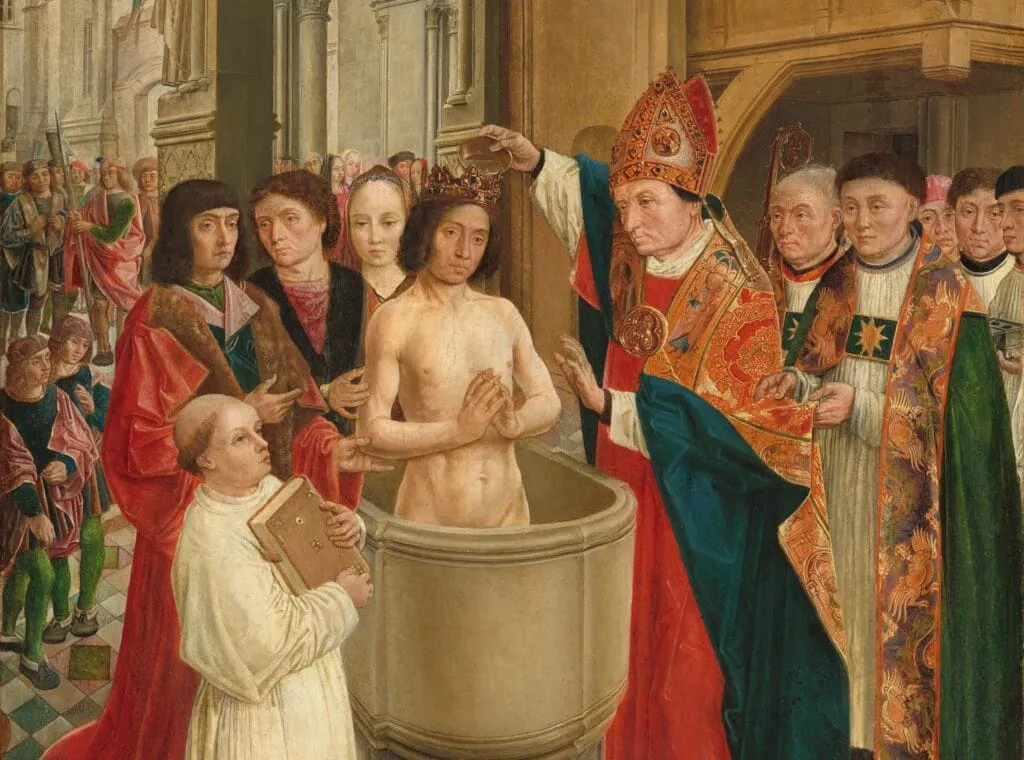
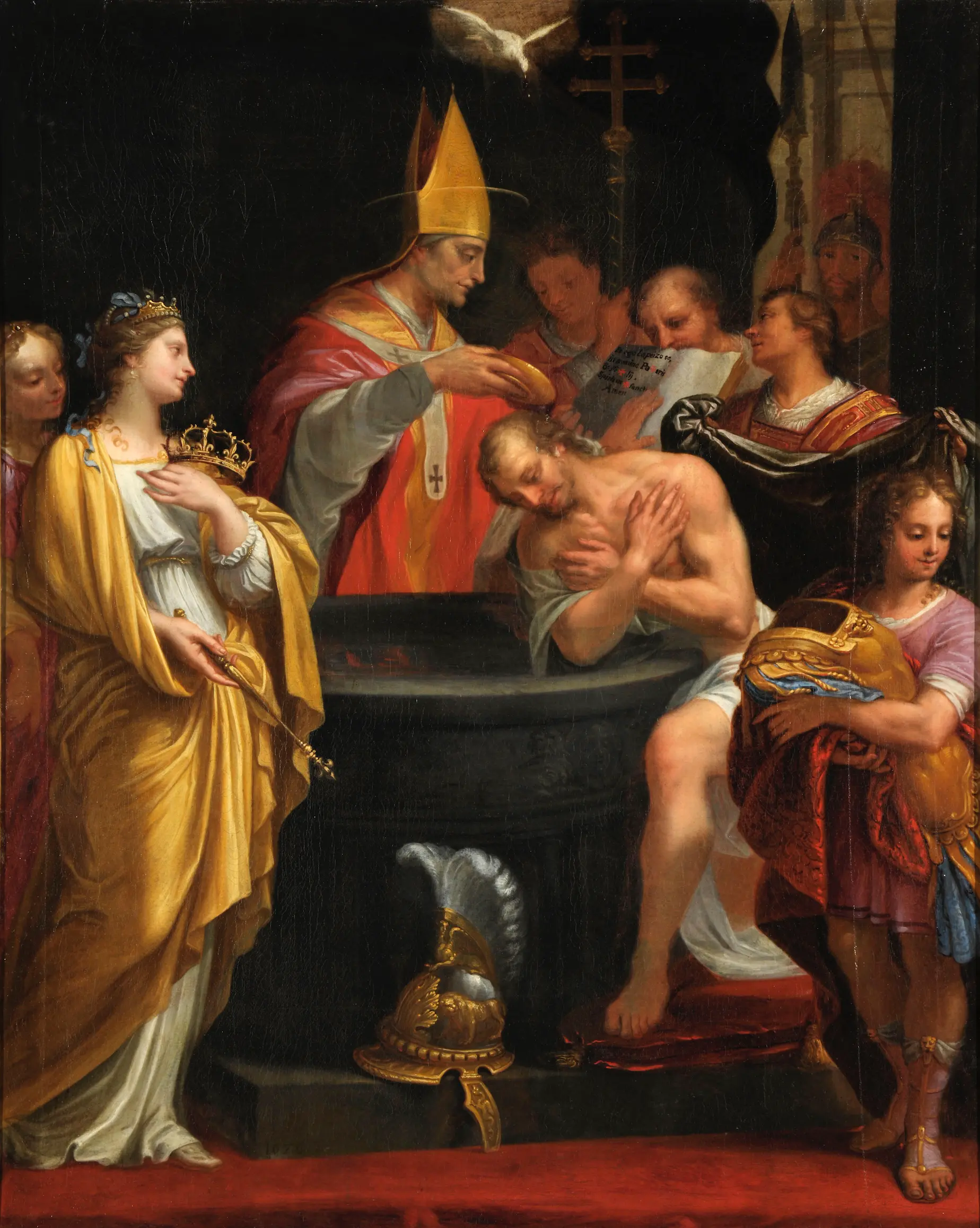
Saint Remigius, Bishop of Reims, after King Clovis was initiated into the sacred baptismal font and the sacraments of faith on Christmas 498, converted the Franks to Christ and, after more than sixty years of episcopate, left this life remarkable for his holiness.
The latest edition of the Roman Martyrology (2001) commemorates Saint Remigius on January 13, his dies natalis, while his optional liturgical memorial in France is celebrated on January 15, the day of his burial.
The calendar of the extraordinary form of the Roman Rite places his commemoration on October 1st, the anniversary of the solemn translation of his remains to the basilica dedicated to him, a translation authorized by Pope Saint Leo IX on October 1st, 1049.
In the past, the Martyrology also remembered him on October 1st, and even today, he is celebrated on that date in many places.
Etymology: Remigius = he who stays at the oar, rower, from Latin
Emblem: Pastoral staff, Phial of oil
Roman Martyrology: At Reims in Belgic Gaul, now in France, the deposition of Saint Remigius, bishop: after King Clovis was initiated into the sacred baptismal font and the sacraments of faith, he converted the Franks to Christ and, after more than sixty years of episcopate, left this life remarkable for his holiness.
Born as a Roman citizen, Remigius witnessed the collapse of the Western Empire in 476 and the disappearance of Rome’s dominion in his Gaul, which passed into the hands of the barbarian tribes of Burgundians, Alemanni, and Visigoths. At the end of the 5th century, the Germanic people of the Franks gradually occupied the country, to which they would eventually give their own name: France.
Remigius belonged to the Gallo-Roman class, linked for generations to Latin culture, from which many men of the Church now came. He was acclaimed Bishop of Reims before reaching the age of thirty, and a brother of his named Principius would become Bishop of Soissons.
At the time, Gaul was an archipelago of Catholic islands in a sea formed by Burgundians and Visigoths of Arian faith, while the countryside was still pagan, just as the Franks, led into Gaul by King Childeric, were also pagan in their own way.
Less evolved than other peoples, the Franks were however great fighters (they wore neither helmet nor armor) and had provided good military services to Rome in the past.
After Childeric died in 482, he was succeeded by his fifteen-year-old son Clovis. To him, Remigius, a Catholic bishop in Frankish territory, wrote letters that were both respectful and authoritative. One of them stated: “Watch that the Lord does not turn His gaze away from you. Take counsel with your bishops.
Enjoy yourself with the young, but deliberate with the old.” On one hand, he admonished him; on the other, he recognized his sovereignty: a political move that was inevitable for Remigius, a “lifelong evangelizer” among the Franks.
He was a precious help for Clovis because he favored the support of other bishops and Gallo-Roman groups. Thus, the king would become master of the country after the victory of 507 at Vouillé over the Visigoths, thereby starting the Merovingian dynasty. But it was not only about politics. His wife Clotilde, who was already Catholic, had a strong religious influence on him; Remigius also influenced him, personally instructing him in the faith.
Many of King Clovis’s subsequent acts reveal an authentic personal religiosity. This led to his baptism by the bishop in Reims on a Christmas Day of an uncertain year. Some claim it was 497. An inscription from the end of the 15th century in Reims reads: “L’an de grace cinq cent le roy Clovis – receut a Reims par saint Remy baptesme.” That would put it at the year 500.
But after that Christmas, whenever it was, Remigius resumed the long, daily work of announcing the Gospel to those who were neither kings nor princes, without poets or chroniclers in tow. A labor that lasted nearly seventy years, according to tradition. A total immersion in his duties, carried out obscurely, and which would only be spoken of after his death, when Remigius was acclaimed a saint directly by popular voice.
The latest edition of the Roman Martyrology (2001) remembers Saint Remigius on January 13, his dies natalis, while his optional liturgical memorial in France is celebrated on January 15, the day of his burial. The calendar of the extraordinary form of the Roman Rite places his commemoration on October 1st, the anniversary of the solemn translation of his remains to the basilica dedicated to him, authorized by Pope Saint Leo IX on October 1st, 1049.
In the past, the Martyrology also remembered him on October 1st, and even today in many places, he is celebrated on that date.
Churches dedicated to Saint Remigius:
- Italy
- Parish Church of Saint Remigius, Fosdinovo (Massa and Carrara), where the Saint’s relics are kept, brought there in 1701 from Lucca, as well as a statue dating back to the second half of the 14th century, a bust placed on top of the entrance portal, and numerous other references to the French Saint.
- Church of Saint Remigius, Carignano (Turin).
- Church of Saint Remigius, Florence.
- Cathedral of Saints John the Baptist and Remigius, Carignano (Turin).
- Church of Saint Remigius, Cavasso Nuovo (Pordenone).
- Church of Saint Remigius, Villadeati (Alessandria).
- Church of Saint Remigius, Goido (Pavia).
- Oratory of Saint Remigius, Verbania-Pallanza.
- Parish of Saint Remigius, Colleverde, Guidonia Montecelio (Rome).
- Parish of Saint Remigius, Vione (Brescia).
- Parish of the Assumption of the Virgin Mary and Saint Remigius, Arignano (Turin).
- Parish of Saint Remigius, Vimodrone (Milan).
- Church of Saints Hilary and Remigius, Figliaro, Beregazzo con Figliaro (Como).
- Church of Saint Remigius, Endine Gaiano (Bergamo). The parish of Endine preserves an authentic relic of the Saint Bishop of Reims, as well as a wooden statue depicting him baptizing King Clovis, dating back to 1867 and created as an “Ex-voto” by the population.
- Church of Saint Remigius in Sedriano (Milan).
- Oratory of Saint Remigius, Busto Garolfo (Milan).
- The former Abbey of Saint Remigius in Parodi Ligure belongs to an ancient Benedictine settlement less than 4 km from Gavi.
- Parish Church of Saints Mary and Remigius, Pecetto di Valenza (Alessandria).
- France
- Saint Remigius Basilica in Reims.
Saint Remigius is the patron saint of:
- Arignano (Turin)
- Carignano (Turin)
- Cavasso Nuovo (Pordenone)
- Fosdinovo (Massa and Carrara)
- Colleverde (Guidonia Montecelio)
- Saint-Rhémy village of Saint-Rhémy-en-Bosses (Aosta Valley)
- Sedriano (Milan)
- Villadeati (Alessandria)
- Pecetto di Valenza (Alessandria)
- Vimodrone (Milan)
- Vione (Brescia)
Name Day
The name day is generally celebrated on January 13th in honor of Saint Remigius, Archbishop of Reims.
Others with this name are also remembered on the following dates:
January 19, Saint Remigius, Archbishop of Rouen
March 20, Saint Remigius, Bishop of Strasbourg
June 19, Saint Remigius Isoré, Jesuit priest, one of the Chinese martyrs
October 28, Saint Remigius, Archbishop of Lyon
sources © Famiglia Cristiana | Wikipedia