

Read the story of the devotion of the Most Sacred Heart of Jesus
The solemnity of the Most Sacred Heart of Jesus – the Day for the Sanctification of Priests – is celebrated on Fridays after the solemnity of Corpus Christi. Almost to suggest to us that the Eucharist/Corpus Domini, is nothing but the Heart itself Jesus, of the One who, with “heart” takes “care” of us.
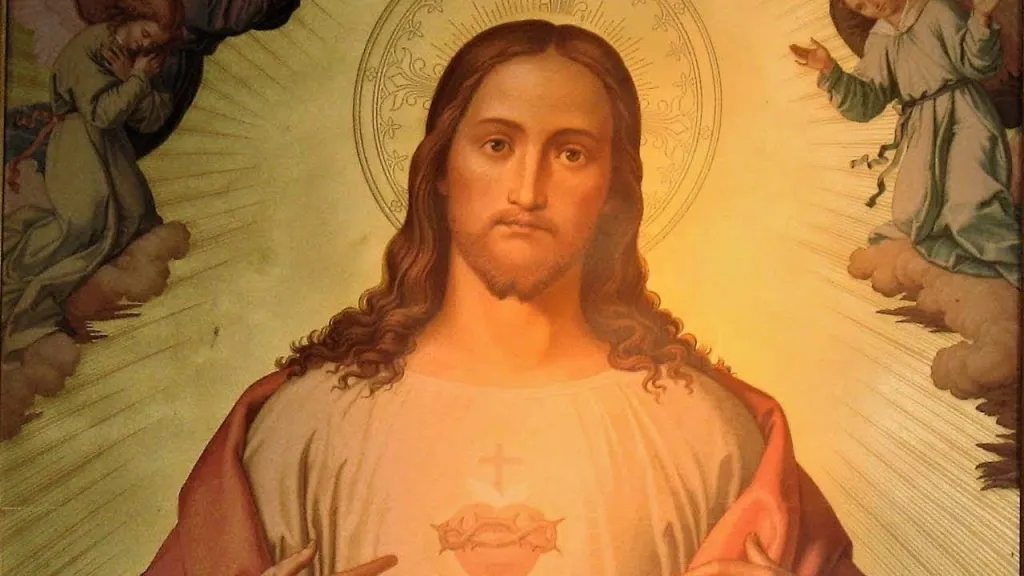
On 20 October 1672, the Norman priest John Eudes celebrated the feast for the first time. But already in some German mystics of the Middle Ages – Matilda of Magdeburg (1212-1283), Matilda of Hackeborn (1241-1298) and Gertrude of Helfta (1256-1302) – and of the Dominican Blessed Henry Suso (1295 – 1366), devotion to the Sacred Heart of Jesus had been cultivated. But to spread the cult, the revelations received from the Lord through the religious visit of Paray-le-Monial, Margherita Maria Alacoque (1647-1690) will contribute. Margherita Alacoque has been living in the French convent of Paray-le-Monial on the Loire since 1671. She already has a reputation as a great mystic when, on December 27, 1673, she received the first visit of Jesus who invited her to take within the assembly of the Last Supper the place that was John, the only apostle who physically rested her head on the breast of Jesus. “My divine heart is so passionate about love for men that since I can no longer enclose the flames of its ardent charity, it must spread them. I chose you for this great design,” he tells her. The following year Margaret has two other visions: in the first there is the heart of Jesus on a throne of flames, more shiny than the sun and more transparent than crystal, surrounded by a crown of thorns; in the other he sees Christ blazing with glory, with the chest from which flames come out from every side, so as to look like a furnace. Jesus speaks to her again and asks her to make Communion every first Friday for nine consecutive months and to bow down for an hour in the night between Thursday and Friday. Thus the practices of the nine Fridays and the Holy Hour of Adoration are born. In a fourth vision, then, Christ asks for the establishment of a feast to honor His Heart and to repair, through prayer, the offenses received by Him. The feast is made mandatory for the whole Church from 1856 with Pius IX. In 1995, St. John Paul II instituted on this same day the World Day of Prayer for the Sanctification of the Clergy, so that the priesthood may be kept in the hands of Jesus, indeed in his heart, in order to be able to open it to all.
“At that time Jesus said, ‘I praise you, Father, Lord of heaven and earth, because you have hidden these things from the wise and the learned, and have revealed them to the little ones. Yes, Father, because you have decided in your kindness. All has been given to me by my Father; no one knows the Son but the Father, and no one knows the Father but the Son and the one to whom the Son will want to reveal it. Come to me, all of you who are tired and oppressed, and I will give you refreshment. Take my yoke above you and learn from me, who are meek and humble in heart, and you will find refreshment for your life. For my yoke is sweet and my weight light” (Mt 11:25-30)
The Little Ones of the Gospel
The liturgy presents us with one of the rare prayers of Jesus and “blesses” the Father of heaven, that is, he publicly recognizes what He has done and is doing towards the “little ones”, to the detriment of the wise and the learned. The content of what is revealed is kept in the expression “You have hidden these things.” From what is understood from the verses preceding this text, “these things” are the understanding of Jesus himself before whom the “wise and intelligent” were refractory. On the other hand, the “little ones” can be the “poor” to whom the gospel is proclaimed, or the “humble,” that is, those who hear and accept the Word. A key to understand that the Most Sacred Heart of Jesus is understandable only to the extent that it becomes “little”, “humble”.
My yoke is sweet
The yoke is a device prepared for animal traction: applied to the front of the body of one or more shooting animals (on the neck), it allows it to be subdued, the attack of a machine and the maneuver by an operator. Starting from this experience from agricultural life, Jesus invites the “little ones” to trust Him by guaranteeing rest, peace, liberation because his yoke is not oppressive. Jesus does not overload those who approach Him, he does not oppress them by loading weights that the masters of time did not even move with a finger. Jesus, humble and pure in heart, is the One who says doing, He accepts the will of the Father and lives it in the first person sharing with “little ones” the commitment required. That is why the yoke of Jesus is sweet, not because it “watered down”, but because it has removed the legalistic incrustations and brought God’s law back to its origin, revealing that God is merciful love. Love forever, remember the psalm.
The Heart
When we hear the word “heart”, we think mostly of the affective, sentimental sphere. But in biblical language it has a much more extensive meaning, because it indicates the whole person in the unity of his conscience, intelligence, freedom. The heart indicates the interiority of man, but also his capacity for thought: it is the seat of memory, the center of choices, of projects. On the open side, Jesus shows us and says to us: “You interest me”, “I take your life to heart”. But he also says: Do this in memory of me: take care of others. With heart. That is, have my own feelings, make my own decisions”, knowing how to be humble and pure in heart.
Prayer
Divine Heart of Jesus,
I offer you through the Immaculate Heart of Mary,
mother of the Church, in union with the Eucharistic Sacrifice,
the prayers, actions, joys and sufferings of this day
in reparation for sins and for the salvation of all men,
in the grace of the Holy Spirit, to the glory of the Divine Father.
Amen.
“It was the day of the Parasheve and the Jews, so that the bodies would not remain on the cross on the Sabbath – it was in fact a solemn day that Sabbath – they asked Pilate that their legs be broken and be taken away. So the soldiers came and broke the legs of one and the other, which had been crucified with him. But when they came to Jesus, seeing that he was already dead, they did not break his legs, but one of the soldiers with a spear struck his side, and immediately blood and water came out.” (Jn 19:31-37)

Blood and water
When the solder reached Jesus, seeing he was already dead, he did not break his legs. But one of the soldiers struck him with a lance, and blood and water immediately flowed out. This detail suggests how much this scene impressed the evangelist.
Jesus had already spoken of water in the context of the gifts of Baptism and the Holy Spirit given to believers: “On the last and greatest day of the feast, Jesus stood up and exclaimed, “Let anyone who thirsts come to me and drink. Whoever believes in me, as scripture says: ‘Rivers of living water will flow from within him.’” He said this in reference to the Spirit that those who came to believe in him were to receive. There was, of course, no Spirit yet, because Jesus had not yet been glorified” (Jn. 7:37-39).
And the gift of his blood symbolizes the Eucharist “Whoever eats my flesh and drinks my blood has eternal life, and I will raise him on the last day. For my flesh is true food, and my blood is true drink. Whoever eats my flesh and drinks my blood remains in me and I in him” (Jn. 6:54-56). This almost suggests to us under what form he would continue being present on earth.
The Heart
When we hear the word “heart”, we think above all about affections, emotions, sentiments. It has a much broader meaning in biblical language. It indicates the entire person in his or her awareness, intelligence, freedom. The heart indicates the interior reality of the person, as well as our desire to think. It is the seat of memory, the centre where choices are made, projects come to fruition. Through his open side, Jesus shows us and says to us: “I am interested in you”, “I take your life to heart”. Likewise, he says: “Do this in memory of me”… take care of others with your heart. In other words, have the same sentiments as I do, make the same decisions I do, knowing how to be “meek and humble of heart”.
Prayer
Divine Heart of Jesus,
I offer you through the Immaculate Heart of Mary,
Mother of the Church,
in union with the Eucharistic Sacrifice,
my prayers, actions, joys and sufferings of this day
in reparation for sins and for the salvation of all people,
in the grace of the Holy Spirit for the glory of the Heavenly Father.
Amen.
Jesus addressed this parable to the Pharisees and scribes: “What man among you having a hundred sheep and losing one of them would not leave the ninety-nine in the desert and go after the lost one until he finds it? And when he does find it, he sets it on his shoulders with great joy and, upon his arrival home, he calls together his friends and neighbors and says to them, ‘Rejoice with me because I have found my lost sheep.’ I tell you, in just the same way there will be more joy in heaven over one sinner who repents than over ninety-nine righteous people who have no need of repentance.” (Lk. 15:3-7)
The paradox of the Gospel
It is a paradox to abandon 99 sheep to go in search of one that is lost at the risk of losing the entire flock! And yet, Jesus reminds us in the Gospel, this is God’s logic. It is the logic of “mercy”. God’s Heart is not satisfied with the joy of the 99 knowing that one is missing, is lost. This compassionate heart moves the “good shepherd” to search for the lost one. In the end he puts it on his shoulders and brings it back home. This gesture is not accidental. At that time having found a “lost” sheep, a leg would be broken so it would learn not to stray from the flock. Jesus, the good shepherd, is the One who carries it on his shoulders instead, giving it what it really needs: tenderness and mercy. This, Jesus reminds us, is the heart of God himself. And when he carries the sheep on his shoulders, we remember how he took the cross on his shoulders for all of us who are “lost”.
Joy
A second aspect that is worth noting is the joy in the air at the feast that takes place on returning home. There is no atmosphere of rebuke or fear, but of a joy that even makes the neighbours participate. This joy is only a “sign” of what will explode in Heaven when we get there. Celebrating the Solemnity of the Most Sacred Heart of Jesus means harmonizing ourselves with his care, with how he makes himself close so that not even one sheep remains lost along the paths of history. Allowing him to draw near requires the attitudes of trust and mercy.
The Heart
When we hear the word “heart”, we think above all about affections, emotions, sentiments. It has a much broader meaning in biblical language. It indicates the entire person in his or her awareness, intelligence, freedom. The heart indicates the interior reality of the person, as well as our desire to think. It is the seat of memory, the centre where choices are made, projects come to fruition. Through his open side, Jesus shows us and says to us: “I am interested in you”, “I take your life to heart”. Likewise, he says: “Do this in memory of me”… take care of others with your heart. In other words, have the same sentiments as I do, make the same decisions I do, knowing how to be “meek and humble of heart”.
Prayer
Divine Heart of Jesus,
I offer you through the Immaculate Heart of Mary,
Mother of the Church,
in union with the Eucharistic Sacrifice,
my prayers, actions, joys and sufferings of this day
in reparation for sins and for the salvation of all people,
in the grace of the Holy Spirit for the glory of the Heavenly Father.
Amen.
fonte © Vatican News – Dicasterium pro Communicatione