


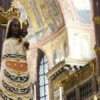
Read the story of Saint Francis Anthony Fasani
Priest O.F.M. Conv. (1681-1742)
Feast Day: November 29
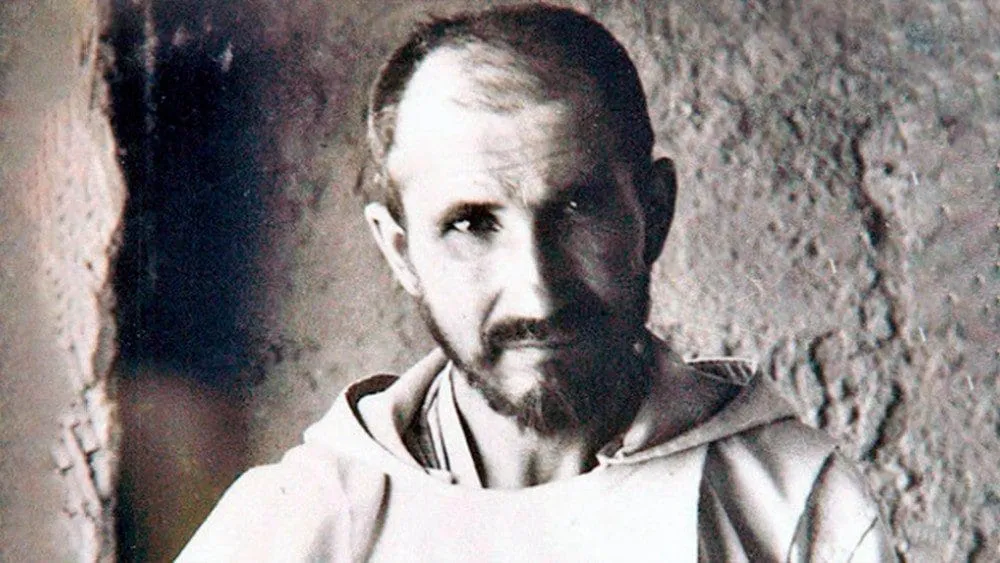
Francis Anthony Fasani, affectionately called “Padre Maestro” (Father Master) by the people of Lucera, was born in Lucera (in the province of Foggia) on August 6, 1681, to humble and modest workers: Giuseppe Fasani and Isabella Della Monica. Baptized on August 10 with the names Donato Antonio Giovanni Nicolò, he was familiarly called “Giovanniello” by everyone.
His father died when he was still young, and his mother Isabella was forced to remarry Francesco Farinacci, who was also a good Christian like the deceased Giuseppe. Giovanniello entered the Order of St. Francis very young, among the Conventual Minors of the Lucera convent, and shone there for his innocence of life, spirit of penance and poverty, seraphic fervor, and apostolic zeal, so much so that he seemed like a “St. Francis Reborn”.
On August 23, 1695, he entered the novitiate of the Friars Minor Conventual of Monte S. Angelo (also in the province of Foggia), took the name Francis Anthony, and made his solemn profession there on August 23, 1696.
The young friar Francis Anthony completed his humanistic studies and attended philosophical courses in the seminaries of his religious Province. He subsequently began theological courses in the Study of Agnone, continued them in the General Study of Assisi near the Tomb of St. Francis, where he received priestly ordination on September 11, 1705; and also attended the academic theological course in Assisi until 1707.
The course of studies, carried out with commitment and a lively desire to assimilate the salvific value of the mysteries of faith, made him “profound in philosophy and learned in theology”, as Antonio Lucci, Bishop of Bovino, who had been his fellow student and rival in the exercise of religious virtues, would attest during the Canonical Processes. At the same time, through an intense spiritual formation, aided by enlightened spiritual masters, he progressed in the life of union with God, conforming himself to the Lord in religious consecration and the priestly charism.
From 1707 until his death, for thirty-five continuous years, he lived in Lucera, giving splendid testimony of evangelical life and zealous pastoral ministry: for this, he was admired by the faithful of Lucera, all of Daunia, and Molise. Within his Franciscan Order, he held offices of particular responsibility. A skilled reader of scholastic philosophy and an esteemed master of young novices and professed friars, he gave considerable impetus to the spiritual and doctrinal formation of his confreres.
In 1709 he obtained a degree in theology, and from then on, Father Fasani was commonly called by the title of “Padre Maestro”, a title that is still attributed to him in Lucera today. He exercised the offices of local and provincial superior with charity and wisdom, proving to be an effective animator of the religious life of his confreres.
He wrote several homiletic works, including a Lenten Sermon Collection (Quaresimale), a Marian Sermon Collection (Mariale), an exposition on the Our Father and the Magnificat, and various Sermons, some of which were in Latin. His main intention in preaching was to “make himself understood by everyone”, as he habitually said in his modesty; his catechesis, typically Franciscan, was directed primarily to the humble people toward whom he felt particularly drawn.
His charity towards the poor and suffering was inexhaustible; among various initiatives, he promoted the kind custom of collecting and distributing gift packages to the poor on the occasion of Christmas. But his priestly zeal and charity shone most singularly in assisting prisoners and the condemned, whom he personally accompanied to the place of execution to comfort their last moments.
He was very devoted to the Immaculate Conception: he habitually instilled in the souls he directed acts of reverence for the Madonna and meditation on her virtues. Even today, the beautiful statue of the Immaculate Conception that he had brought from Naples is the object of particular veneration in the Church of St. Francis; the people still sing the Marian song he composed.
He died in Lucera on November 29, 1742, the first day of the Novena of the Immaculate Conception.
After his death, for over two centuries, he continued to remain in the shadows, known and loved only by his fellow citizens who benefited, from generation to generation, from his help and powerful protection.
He was beatified by the Venerable Pius XII (Eugenio Pacelli, 1939-1958) on April 15, 1951. On April 13, 1986, inside St. Peter’s Basilica, St. John Paul II (Karol Józef Wojtyła, 1978-2005) canonized Francis Anthony Fasani and, one year after the canonization, on May 25, 1987, he made a pilgrimage to Puglia and stopped in Lucera to venerate the body of the “Padre Maestro”.
Since 2001, the old Church of St. Francis has become the Sanctuary of St. Francis Anthony Fasani, where every year thousands of devotees go to the foot of the altar to honor the “Padre Maestro”.
Meaning of the name Francis: “free man” (Old German).
Meaning of the name Anthony: “born before” or “one who faces his adversaries” (Greek).
Google maps: https://g.co/kgs/Sm9YaEs
Also read the page of the Municipality of Lucera (FG) with Holy Mass schedule: https://www.comune.lucera.fg.it/lucera/zf/index.php/servizi-aggiuntivi/index/index/idtesto/73

The life of Fr. Francis Anthony Fasani appears clearly and singularly oriented towards God from childhood, due to the Christian education received from his parents, and the attraction exerted on his soul by the grace of his religious and priestly vocation. He was born in Lucera on August 6, 1681, to Giuseppe Fasani and Isabella Della Monaca, who soon had the joy of seeing their Giovanniello – as they called him by his baptismal name – grow up well-endowed with promising moral and intellectual gifts. Introduced to studies at the Franciscan Convent of the Friars Minor Conventual of Lucera, Giovanniello had a clearer perception of his vocation, to which he adhered with generous enthusiasm. Admitted to the Order of Friars Minor Conventual, he took the names of Saints Francis and Anthony, thus expressing his fervent aspiration to follow their example by consecrating himself to the evangelical and apostolic life. Having made his profession in 1696, the young friar Francis Anthony completed his humanistic studies and attended philosophical courses in the seminaries of his religious Province. He subsequently began theological courses in the Study of Agnone, continued them in the General Study of Assisi near the Tomb of St. Francis, where he received priestly ordination in 1705; and also attended the academic theological course in Assisi until 1707.
The course of studies, carried out with commitment and a lively desire to assimilate the salvific value of the mysteries of faith, made him “profound in philosophy and learned in theology,” as the Ven. Antonio Lucci, Bishop of Bovino, who had been his fellow student and rival in the exercise of religious virtues, would attest during the Canonical Processes. At the same time, through an intense spiritual formation, aided by enlightened spiritual masters, he progressed in the life of union with God, conforming himself to the Lord in religious consecration and the priestly charism.
From 1707 until his death, for thirty-five continuous years, he lived in Lucera, giving splendid testimony of evangelical life and zealous pastoral ministry, and for this, he was admired by the faithful of Lucera, all of Daunia, and Molise. Within his Franciscan Order, he held offices of particular responsibility. A skilled reader of scholastic philosophy and an esteemed master of young novices and professed friars, he gave considerable impetus to the spiritual and doctrinal formation of his confreres. In 1709 he obtained a degree in theology, and from then on, Father Fasani was commonly called by the title of “Padre Maestro,” a title that is still attributed to him in Lucera today. He exercised the offices of local and provincial superior with charity and wisdom, proving to be an effective animator of the religious life of his confreres.
The spiritual life of Fr. Fasani was characterized by those virtues that made him similar to his seraphic father, St. Francis. In fact, it was said in Lucera: “Whoever wants to see what St. Francis looked like in life should come and see the Padre Maestro.” In imitation of St. Francis, he built his religious life on the basis of a generous participation in the mysteries of Christ through the most faithful practice of the evangelical counsels, which he considered as a radical expression of perfect charity. In his continuous prayers, kindled by seraphic fervor, he invoked God, calling Him “supreme Love, immense Love, eternal Love, infinite Love.”
His fervent devotion to the Immaculate Mother of the Lord was fueled by intense application to always better know and make known “who Mary is,” and at the same time, to recognize and make known with faith and love the maternal role entrusted to her in the history of salvation.
The priestly life of Father Francis Anthony Fasani is a splendid testimony of fidelity and dedication to the mission entrusted in the Church to all presbyters, who strive, as the Second Vatican Council vigorously confirms, to promote “with their ministry and life the glory of God the Father in Christ” (PO, 2). Fr. Fasani dedicated himself to the exercise of this evangelical mission with ardor from his priestly ordination, to such an extent that one witness could assert: “He spared no effort to save souls.” His pastoral ministry proved to be zealously engaged in the multiple fields and forms of apostolate according to the needs of the particular Churches in which he felt integrated.
Particular importance in his apostolic life is assumed by the ministry of the word of God. He almost continuously preached mission courses to the people, spiritual exercises, Lenten services, and novenas in Lucera and wherever he was called. The task of all priests, which is to “invite all to conversion and holiness” (PO, 4), was carried out by Fr. Fasani with a form of preaching based on Sacred Scripture, well-prepared, persuasive, and which had the purpose, as one witness recalls, “of eradicating vices and sins, planting good, and encouraging the practice of virtue.”
A worthy minister of “Him who unceasingly exercises His priestly mission in our favor in the Liturgy, by means of the Spirit” (PO, 5), Fr. Fasani dedicated himself with all his energy to zealously carrying out the sacred ministry, especially with the administration of the Sacrament of Reconciliation and with the celebration of the Eucharistic Sacrifice. “He confessed every class of people – asserts a witness – with utmost patience and cheerfulness of face.” He showed charity and welcome to everyone, justifying himself with the hope of one day being able to say to the Lord: “I was indulgent, I do not deny it, but You taught me to be so.” The Eucharist constituted the cornerstone of his religious life, and at the same time represented the goal to which he ordered all his priestly ministry. In fact, the Eucharist has always been considered “as the source and summit of evangelization,” and the faithful have always felt “fully inserted into the Body of Christ through the Eucharist” (PO, 5). A fervent minister of the Eucharist, Fr. Fasani celebrated the Sacrifice of the Mass with an intense fervor that elevated and nourished his spirit and at the same time edified the participants; and in his preaching, he instilled love for the Eucharist in the faithful, also promoting daily Communion.
The poor, the sick, and prisoners constituted a privileged field of his pastoral activity. Driven by his evangelical-charitable program, “Charity must be done,” he loved to pray with the poor and for the poor; every day he personally distributed the charitable aid of the religious community to the poor, and very often he had gifts and aid collected from benefactors delivered to them. Sometimes his prayers obtained prodigious interventions of Divine Providence in favor of the poor. He visited and comforted the sick, exhorting them to seek reasons for hope and resignation in the goodness of God. The spiritual care of the detainees, entrusted to him by the Bishop of Lucera, allowed him to visit prisoners every day and exhort them to trust in God’s merciful love; he was entrusted with the task of assisting those condemned to death until their final moments.
The testimonies given during the Canonical Processes assure us that God rewarded the apostolic zeal of Fr. Fasani with abundant fruits of conversion and renewed Christian life among the faithful. Thus, those values of the sacred ministry that the Second Vatican Council expresses in these terms found full realization in the priestly life of Fr. Francis Anthony Fasani: “Presbyters, whether they devote themselves to prayer and adoration, or preach the Word, or offer the Eucharistic Sacrifice and administer the other Sacraments, or carry out other ministries in the service of men, always contribute to the increase of the glory of God and at the same time enrich men with divine life” (PO, 2).
When Fr. Fasani was struck by his final illness in 1742, he wanted to offer it to the Lord, in a spirit of perfect joy, with the expression with which he had always offered the actions of his life to God: “God’s Will, my paradise.” On November 2 of the same year, Fr. Francis Anthony Fasani, comforted by the holy Sacraments and the invoked protection of the Immaculate Virgin Mary, gave up his soul to God, in the Convent of his native city where for 35 years he had proved to be a faithful witness of Christ. His body was buried in the annexed Church of St. Francis after a funeral rite attended by all of Lucera with the cry: “The holy Padre Maestro is dead!”
The fame of holiness that had surrounded Fr. Fasani in life saw extraordinary growth after his death; so much so that the Bishop of Lucera decided to initiate the Process on the life, virtues, and miracles of the Servant of God as early as 1746. Subsequently, the Apostolic Process on the virtues was initiated, followed by the Decree on the heroic nature of the virtues promulgated by the Supreme Pontiff Leo XIII on June 21, 1891. His Holiness Pius XII, after having approved two miracles attributed to the intercession of the Venerable Fasani, elevated him to the honor of the altars on April 15, 1951.
A new miracle attributed to the intercession of the Blessed was approved by Decree of March 21, 1985, by the Holy Father John Paul II.