
Mary, Most Holy Mother of God: read the story
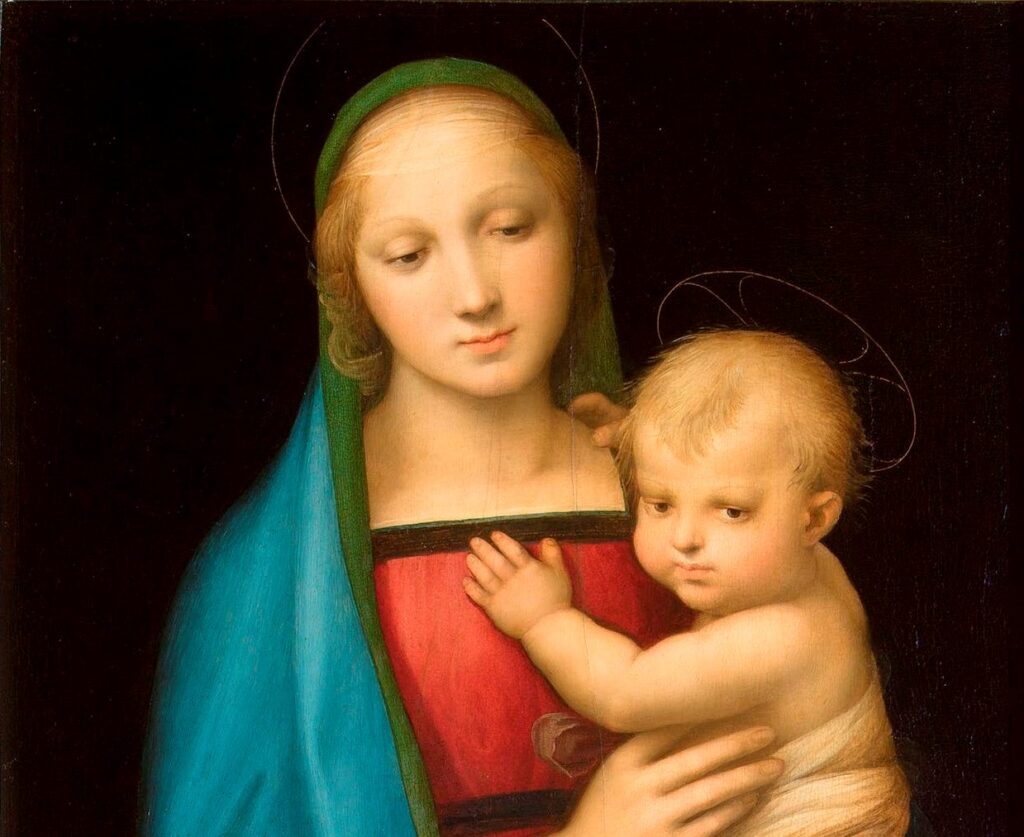
The civil year opens with a solemnity very dear to all Christians: the one celebrating Mary as the Holy Mother of God, which falls within the octave of the Nativity of the Lord as well as on the day of his circumcision. It is also the first Marian feast to appear in the Western Church.
Mother of God (in Greek Θεοτόκος; in Latin Deipara or Dei genetrix) is a title given to Mary in 431 by the Council of Ephesus through the proclamation of a dogma, and it is a consequence of the Christological doctrine affirmed by the council.
According to the council, Jesus Christ, while being both God and man — as previously stated by the Council of Nicaea (325) — is a single person. The two natures, divine and human, are inseparable, and therefore Mary can legitimately be called Mother of God. The Solemnity of Mary, Mother of God, is the first Marian feast to appear in the Western Church.
Blessed Paul VI decreed that, starting from 1967, January 1st would also become World Day of Peace; on this occasion, the Supreme Pontiff sends a message to the Heads of Nations inviting reflection on the theme of Peace.
“While he was saying this, a woman raised her voice from the crowd and said: ‘Blessed is the womb that carried you and the breasts at which you nursed!’. But he said: ‘Blessed rather are those who hear the word of God and observe it!’”. (Lk 11:27-28)
In this passage from the Gospel of Luke, Jesus himself makes a distinction between Mary’s personal holiness and her divine motherhood. Mary, therefore, remains a creature through whom, thanks to the mysterious action of the Holy Spirit, the Word became flesh.
The dogma of divine motherhood
The declaration of the truth of faith establishing Mary as the Mother of God dates back to the Council of Ephesus in 431 which, by affirming the dual human and divine nature of Christ, consequently also established that Mary is the Mother of Christ and therefore of God.
At the time of the Council, however, given the historical context of numerous heresies spreading precisely regarding the nature of Christ, there was probably more interest in establishing a Christological dogma rather than a Marian one.
From this, it is observed that all truths in honor of Mary are neither autonomous nor independent, but depend entirely on Christ: her Son. Finally, Mary’s motherhood is a gift, a grace that God grants her, making her, indeed, “full of grace”.
The origins of the solemnity
The “Natale Sanctae Mariae” began to be celebrated in Rome in the 6th century, likely coinciding with the first dedication of a church to the Virgin: Santa Mary Antiqua at the Roman Forum.
It was celebrated on January 1st as the eighth day after Christmas until 931, when, on the occasion of the fifth centenary of the Council of Ephesus, Pope Pius XI moved the memorial to October 11th in remembrance of the day the council took place.
The celebration returned to January 1st with the liturgical reform of 1969. In the Ambrosian rite, the anniversary is fixed on the last Sunday of Advent; in the Syriac and Byzantine rite traditions, it is celebrated on December 26th; in the Coptic rite, however, on January 16th.
Finally, since 1967, by the will of Paul VI, World Day of Peace has also been celebrated in conjunction with this solemnity and in the name of Mary, understood as God’s greatest gift to man: salvation.
The Octave of Christmas coincides with the new year. Since pagans celebrated this day in debauchery and superstition, the early Church helped believers start the year with a “new spirit”: hence, days of penance and fasting.
In 431, during the Council of Ephesus, which ended on June 22nd, the truth of faith regarding the “divine motherhood of Mary” was defined. Thus, in 1931, marking the 15th centenary of the Council, Pope Pius XI instituted the liturgical feast, which we already find in the 7th century.
It is a day full of meaning and messages: the Octave of Christmas, the circumcision and imposition of the Most Holy Name of Jesus, and the solemnity of Mary, Mother of God, not to mention the World Day of Peace (since 1968, with Paul VI).
The messages of this first day of the year are truly many: we are invited to learn from the Virgin Mother to “keep” the Word, and to ask ourselves what the Lord Jesus will want to say to us through the passing days, knowing we are under the “sign” of God’s blessing, as the first reading from Numbers reminds us.
In that time the shepherds went, without delay, and found Mary and Joseph and the infant, lying in the manger.
And after seeing him, they reported what had been told them about the child. All who heard it were amazed at what was told them by the shepherds. Mary, for her part, kept all these things, meditating on them in her heart. The shepherds returned, glorifying and praising God for all they had heard and seen, as it had been told to them.
When the eight days prescribed for circumcision were completed, he was named Jesus, the name given by the angel before he was conceived (Lk 2:16-21).
The birth of the Child of Bethlehem
Luke’s text does not recount sensational events. The single and central event that can be told has already happened: the birth of that Child whom the angels announce as Savior and Christ the Lord (Lk 2:11), and whom we heard in the Gospel of the Christmas Day Dawn Mass.
The Shepherds and the peripheries of the world
The first people to whom the announcement was brought by the angels are the shepherds, and they are the first who, “without delay” (Lk 2:16), ran to the grotto to “see this occurrence” (Lk 2:15).
As mentioned at Christmas, since Jesus was born outside Jerusalem, it was inevitable that the first to arrive would be the shepherds. It is also true that in them we can see represented the excluded, the sinners, those far away, toward whom Jesus would show special attention, even creating tensions to which Jesus himself would reply: “I did not come for the healthy, but for the sick; I did not come for the righteous, but for sinners” (cf. Mt 9:13; consistent with the call of David in 1Sam 16:1-13, who was at pasture).
Arriving at the grotto, they saw the Child and “reported what had been told to them” (Lk 2:17).
A race and a praise
In the shepherds’ race toward the Grotto, we can recall Mary’s haste (Lk 1:39) toward her cousin Elizabeth after the angel’s announcement, and her song of exultation, the Magnificat.
The shepherds also, “amazed”, “returned, glorifying and praising God for all they had seen and heard…” (Lk 2:20; as also, before them, the three young men in the fiery furnace, according to Daniel 3:24-51).
We could almost say that the shepherds became angels, bringing to others the announcement they themselves had received, given that they could not keep it to themselves, as John would later say: “What we have heard… seen with our eyes, what we contemplated… we announce also to you”, words that echo and extend the words of Psalm 19: “The heavens declare the glory of God…” (cf. 1Jn 1:1-3; cf. Ps 19).
This announcement of joy has also reached us today, through generations of “angels” who have passed it on from “life to life”, because whoever crosses the gaze of Jesus (cf. Mt 4:12-23), whoever is seduced by his Love (Jer 20:7) cannot help but bring it to others…
A bringing that involves one’s whole self, one’s whole life: “Preach the Gospel always and, if necessary, even with words” (Franciscan Sources 43), said Saint Francis of Assisi, making it understood that words are an addition; what matters is that life speaks.
Mary, the Theotokos
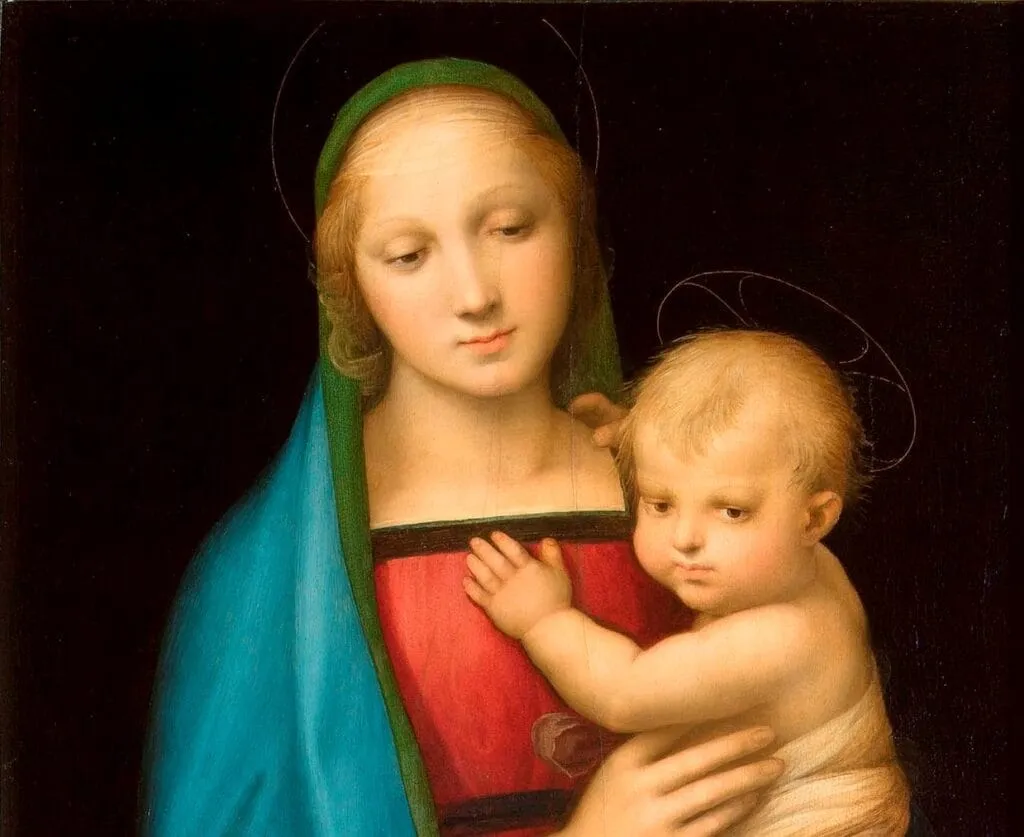
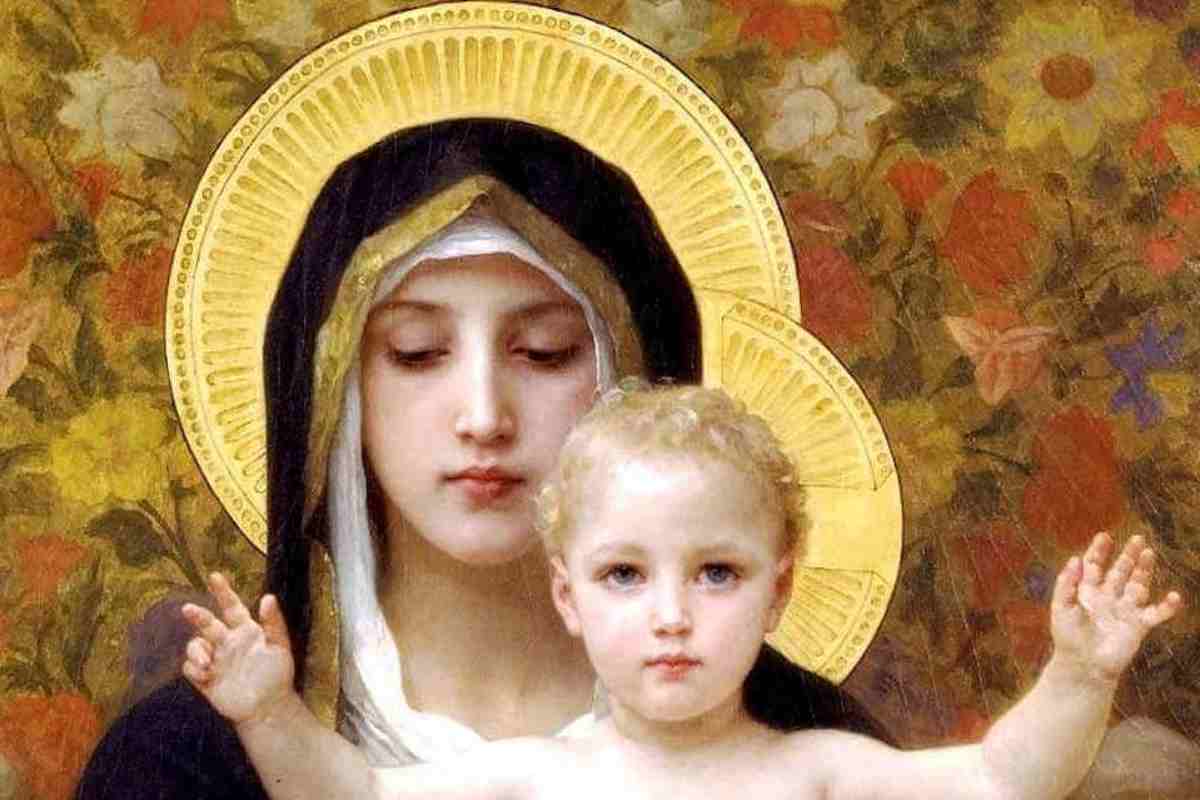
Mary is the Mother of God because she is the Mother of Jesus, true God and true man. For this reason, she is the one who better than anyone can lead us to her Son, because no one like her knows who Jesus is and no one knows how to relate to Him better than she does.
Mary is the Mother who, faced with the words of the shepherds, immediately understands that this Child is not only “her Son”: “My mother and my brothers are those who hear the word of God and put it into practice”, Jesus would say one day (Lk 8:19-21).
She, who carried him in her womb for nine months, must now receive him every day, knowing how to listen to those whom the Lord will make her meet: the shepherds, the magi, Simeon, and Anna… because each one “reveals” something about the identity of Jesus and his mission.
Prayer
We fly to thy protection,
O Holy Mother of God: despise not our petitions
in our necessities, but deliver us always from all dangers,
O glorious and blessed Virgin.
(the oldest Marian prayer)
From the homily of Pope Benedict XVI (Vatican Basilica, January 1, 2008)
Dear brothers and sisters!
We begin a new year today and Christian hope takes us by the hand; we begin by invoking divine blessing upon it and imploring, through the intercession of Mary, Mother of God, the gift of peace: for our families, for our cities, for the whole world […]
In the first Reading, from the Book of Numbers, we heard the invocation: “The Lord grant you peace” (6:26); may the Lord give peace to each of you, to your families, to the whole world.
We all aspire to live in peace, but true peace, that announced by the angels on Christmas night, is not a simple human conquest or the fruit of political agreements; it is first and foremost a divine gift to be constantly implored and, at the same time, a commitment to be carried forward with patience while remaining always docile to the Lord’s commands…
Our thought now turns naturally to Our Lady, whom today we invoke as Mother of God. It was Pope Paul VI who transferred the feast of the Divine Motherhood of Mary, which once fell on October 11th, to the first of January.
In fact, before the liturgical reform following the Second Vatican Council, on the first day of the year the memory of the circumcision of Jesus on the eighth day after his birth was celebrated — as a sign of submission to the law, his official entry into the chosen people — and the following Sunday the feast of the Name of Jesus was celebrated.
We see some traces of these occurrences in the Gospel page that was proclaimed a short while ago, in which Saint Luke reports that eight days after birth the Child was circumcised and given the name Jesus, “the name given by the angel before he was conceived in the womb” (Lk 2:21). Today’s celebration, therefore, in addition to being a most significant Marian feast, also preserves a strongly Christological content, because, we could say, before the Mother, it concerns precisely the Son, Jesus true God and true Man.
The apostle Paul refers to the mystery of the divine motherhood of Mary, the Theotokos, in the Letter to the Galatians. “When the fullness of time had come, — he writes — God sent his Son, born of a woman, born under the law” (4:4). In a few words, we find synthesized the mystery of the incarnation of the eternal Word and the divine motherhood of Mary: the great privilege of the Virgin lies precisely in being the Mother of the Son who is God. […]
The title Mother of God is the foundation of all other titles with which Our Lady has been venerated and continues to be invoked from generation to generation, in the East and in the West. Many hymns and prayers of the Christian tradition refer to the mystery of her divine motherhood, such as a Marian antiphon of the Christmas season, Alma Redemptoris Mater, with which we pray: “Tu quae genuisti, natura mirante, tuum sanctum Genitorem, Virgo prius ac posterius – You who, to the wonder of all creation, brought forth your own Creator, Mother ever virgin“.
Dear brothers and sisters, let us contemplate today Mary, ever-virgin mother of the only-begotten Son of the Father; let us learn from her to welcome the Child who was born for us in Bethlehem. If in the Child born of her we recognize the eternal Son of God and welcome him as our only Savior, we can be called and truly are children of God: children in the Son. The Apostle writes: “God sent his Son, born of a woman, born under the law, to ransom those who were under the law, so that we might receive adoption as sons” (Gal 4:4).
The evangelist Luke repeats several times that Our Lady meditated silently on these extraordinary events in which God had involved her. We also heard this in the short Gospel passage that the liturgy proposes to us today. “Mary kept all these things, pondering them in her heart” (Lk 2:19). […]
Dear brothers and sisters, only by keeping in the heart, that is, putting together and finding a unity of all that we live, can we enter, following Mary, into the mystery of a God who for love became man and calls us to follow him on the path of love; love to be translated every day into generous service to our brothers and sisters.
May the new year, which we confidently begin today, be a time in which to advance in that knowledge of the heart, which is the wisdom of the saints. Let us pray that, as we heard in the first Reading, the Lord “make his face shine” upon us, be “gracious to us” (cf. Nm 6:24-27), and bless us. We can be sure of this: if we do not tire of seeking his face, if we do not yield to the temptation of discouragement and doubt, if even among the many difficulties we encounter we remain always anchored to Him, we will experience the power of his love and mercy.
May the fragile Child whom the Virgin shows to the world today make us workers of peace, witnesses of Him, Prince of Peace. Amen! © Copyright 2008 – Libreria Editrice Vaticana
To read the full Homily: >>> Solemnity of Mary, Mother of God
pax ET bonum
sources © Vatican News – Libreria Editrice Vaticana