Read the Story of Saint Andrew the Apostle
Martyr. Celebrated on November 30
Andrew (in Greek Ανδρέας), called, according to Orthodox tradition, Protocletos or the First Called. This can be deduced from the Gospel of John, which, in addition to stating that Andrew was the first to follow Jesus, provides other details: “One of the two who heard John (the Baptist) speak and followed him was Andrew, the brother of Simon Peter.”
He first found his brother Simon and said to him, “We have found the Messiah (which means Christ)” and he brought him to Jesus. Jesus looked at him and said: “You are Simon, son of John; you will be called Cephas (which means Peter).” The next day Jesus decided to leave for Galilee; he met Philip and said to him: “Follow me.” Philip was from Bethsaida, the city of Andrew and Peter.” (Jn 1:40–44)
Andrew was therefore born in Bethsaida in 6 B.C., but his name, like other Greek names, was almost certainly not his original name, since in the Hebrew or Jewish tradition the name Andrew appears only from the 2nd–3rd century onward.
Andrew and his older brother Peter were fishermen: “As he was walking by the Sea of Galilee, he saw Simon and Andrew, Simon’s brother, casting a net into the sea; they were fishermen. Then Jesus said to them: ‘Follow me, and I will make you fishers of men.’ And immediately they left their nets and followed him.” (Mk 1:16–18)
In the Gospels, Andrew is shown to be present at many important moments as one of the disciples closest to Jesus:
“As he was sitting on the Mount of Olives opposite the temple, Peter, James, John, and Andrew asked him privately…” (Mk 13:3);
“One of his disciples, Andrew, Simon Peter’s brother, said to him: ‘There is a boy here who has five barley loaves and two fish; but what are they among so many people?’” (Jn 6:8–9);
“Philip went and told Andrew; then Andrew and Philip went and told Jesus. Jesus answered: ‘The hour has come for the Son of Man to be glorified.’” (Jn 12:22–23).
In the Acts of the Apostles, however, Andrew is mentioned only briefly, like other apostles: “When they entered the city, they went to the upper room where they were staying. There were Peter and John, James and Andrew, Philip and Thomas, Bartholomew and Matthew, James son of Alphaeus and Simon the Zealot, and Judas son of James.” (Acts 1:13).
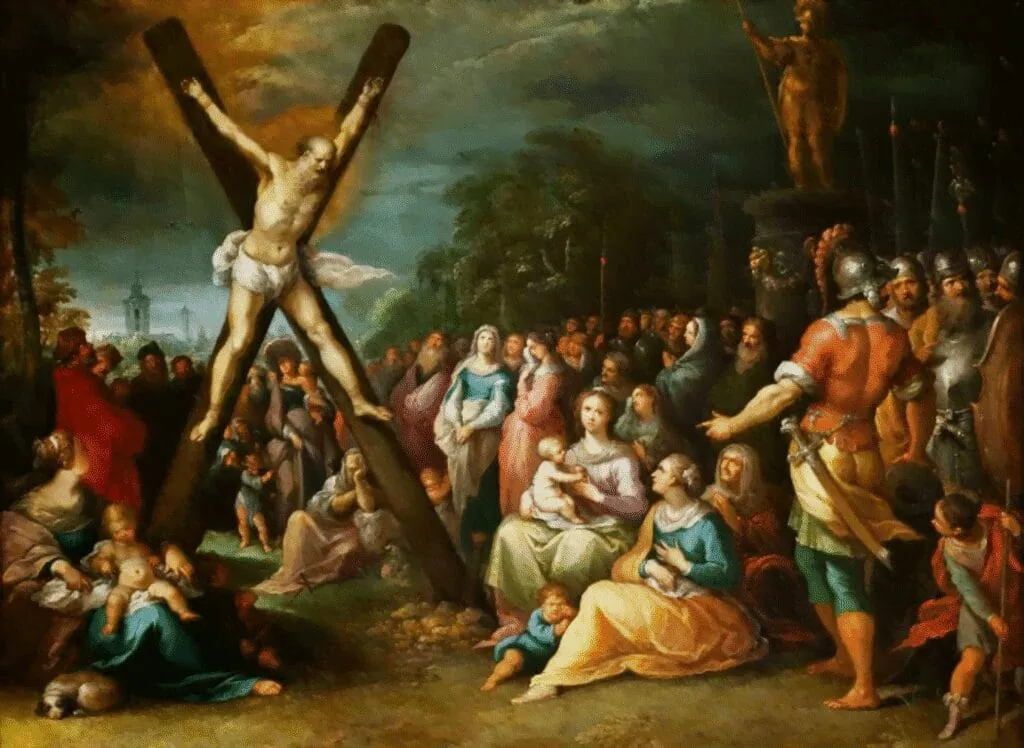
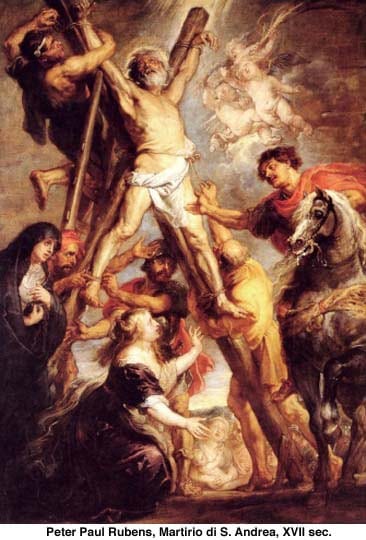
The historian Eusebius of Caesarea (c. 265–340) records in his Ecclesiastical History that Andrew preached the Gospel in Asia Minor and southern Russia. Then, having gone to Greece, he led the Christians of Patras. There, on November 30 of the year 60, he suffered martyrdom by crucifixion: tied with ropes upside down, according to tradition, on an X-shaped cross, later called the “Cross of Saint Andrew.”
In 357 his remains were brought to Constantinople, but his head, except for a fragment, remained in Patras. In 1206, during the occupation of Constantinople (Fourth Crusade), the papal legate Cardinal Capuano of Amalfi transferred those relics to Italy; in 1208 the people of Amalfi solemnly welcomed them into the crypt of their Cathedral.
When the Turks invaded Greece in 1460, the Apostle’s head was taken from Patras to Rome, where it was kept in St. Peter’s for five centuries until Blessed Paul VI (Giovanni Battista Montini, 1963–1978), in 1964, returned the relic to the Church of Patras, of which St. Andrew is the patron.
All other known relics attributed to St. Andrew are located in significant places of his veneration: in the Cathedral of St. Andrew in Amalfi, in St. Mary’s Cathedral in Edinburgh, Scotland, and in the Church of St. Andrew and St. Albert in Warsaw, Poland. Another place where relics of the Saint are kept is the Casino di Cicco in Sant’Apollinare (Frosinone).
St. Andrew is also patron of Scotland, Russia, Prussia, Romania, Greece, Amalfi, and Luqa (Malta).
The feast of St. Andrew is celebrated on November 30 in both Eastern and Western Churches and is a national holiday in Scotland, where the “Cross of Saint Andrew” appears on the national flag.
Meaning of the name Andrew: “manly, strong” (Greek).
For further reading, see the Catechesis of Pope Benedict XVI: Andrew, the Protoclete
[Croatian, French, English, Italian, Portuguese, Spanish, German]
source © Vangelodelgiorno.org
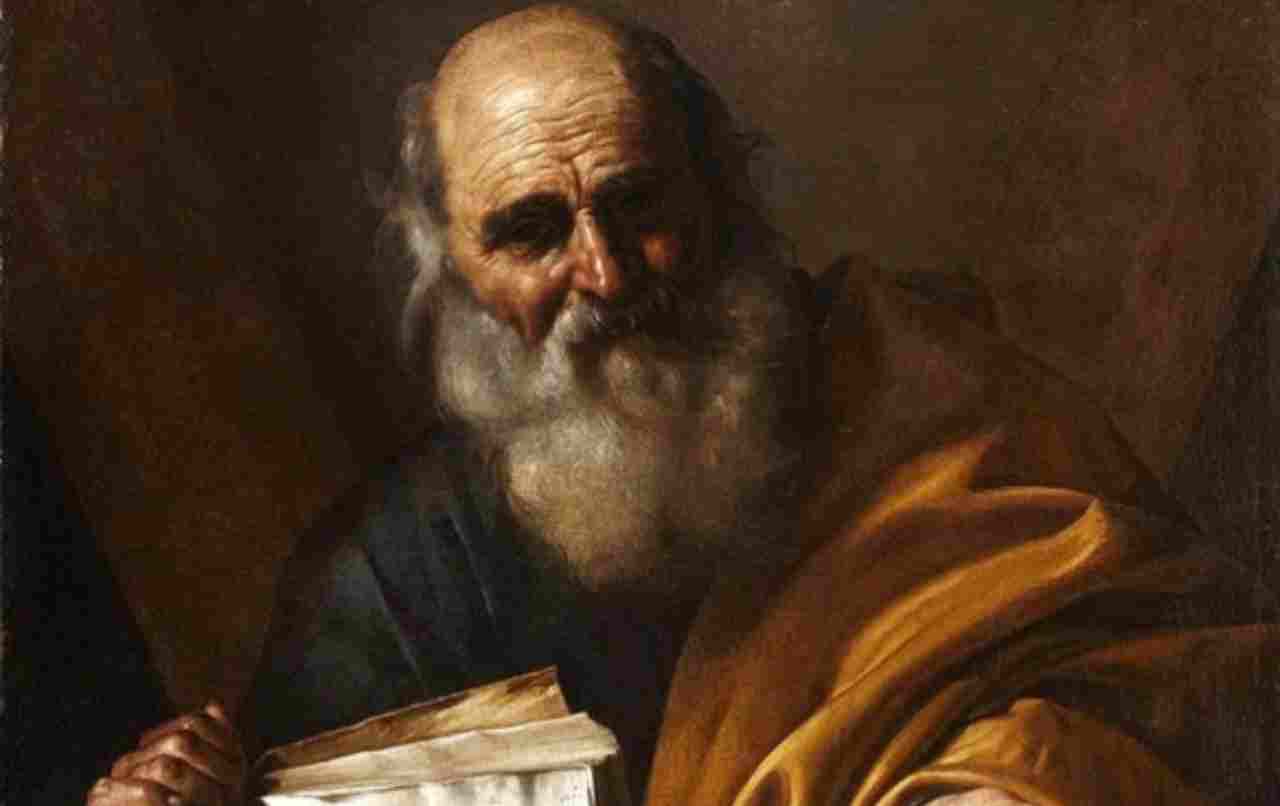
Remembered on November 30, Saint Andrew the Apostle is the Patron Saint of the Orthodox Church of Constantinople. Brother of Simon Peter, among the saints he stands out for being the first to be called by Jesus and for having been martyred on a decussate cross. He is the protector of fishermen.
First to Be Called by Jesus
“We have found the Messiah.” An overwhelming and fulfilling joy, like that of someone who discovers they have reached a long-desired goal. Such sound in the Gospel of John the words of Andrew, who runs to his brother Simon to share the excitement of having been called, “first,” by Jesus.
A fisherman from Bethsaida in Galilee, a disciple of John the Baptist, Andrew recognizes in the son of Joseph the carpenter “the Lamb of God.” The evangelist records the hour of that encounter by the River Jordan, which forever marked his life: “it was about four in the afternoon.”
He Left His Nets at Once and Followed Him
“Rabbi, where are you staying?” Christ’s response to Andrew and his companion comes quickly: “Come and see.” An invitation impossible to refuse, foreshadowing the later and more explicit call made by Jesus along the Sea of Galilee also to Simon: “Follow me, and I will make you fishers of men.” The two are shaken but do not hesitate and, as the evangelist Matthew recounts, “at once, they left their nets and followed him.”
From that first spiritually explosive exchange of glances begins a journey of faith — daily discipleship of Christ. Andrew is indeed one of the Twelve, whom the Son of God chooses as his closest friends. Witnessing the multiplication of the loaves and fishes must have been astonishing: incredulous before the miracle, looking at the hungry crowd and the mere five barley loaves and two fish available, he had asked: “What are they among so many people?”
Patron in Romania, Ukraine, and Russia
Jesus strengthens the apostle’s faith more and more each day, and together with Peter, James, and John, he takes him aside on the Mount of Olives, answering their questions about the signs of the end times.
It is known that Andrew brought to the Messiah some Greeks who wished to meet him, but the Gospels reveal no further certain information about his life. The Acts of the Apostles report that, together with the others, he went toward Jerusalem after the Ascension.
The remaining account of the saint’s life is entrusted to non-canonical and apocryphal texts. “You will be a pillar of light in my Kingdom,” Jesus is said to have told Andrew according to an ancient Coptic writing. Early Christian writers state that the apostle evangelized Asia Minor and the regions along the Black Sea, reaching as far as the Volga; today he is venerated as patron in Romania, Ukraine, and Russia.
Martyr on the Decussate Cross
The preaching of the Good News continued tirelessly in Achaia and, around the year 60 in Patras, Andrew faced martyrdom: hung on a cross he desired to be in the shape of an X, recalling the Greek initial of Christ’s name. Before drawing his final breath, according to the Golden Legend, he is said to have spoken these words: “O Cross, sanctified by the body of Christ. Good Cross, long desired — I have always loved you and wished to embrace you. Receive me and take me to my Master.”
fonte © Vatican News – Dicasterium pro Communicatione