
Liturgical Feast: Immaculate Conception of the Blessed Virgin Mary
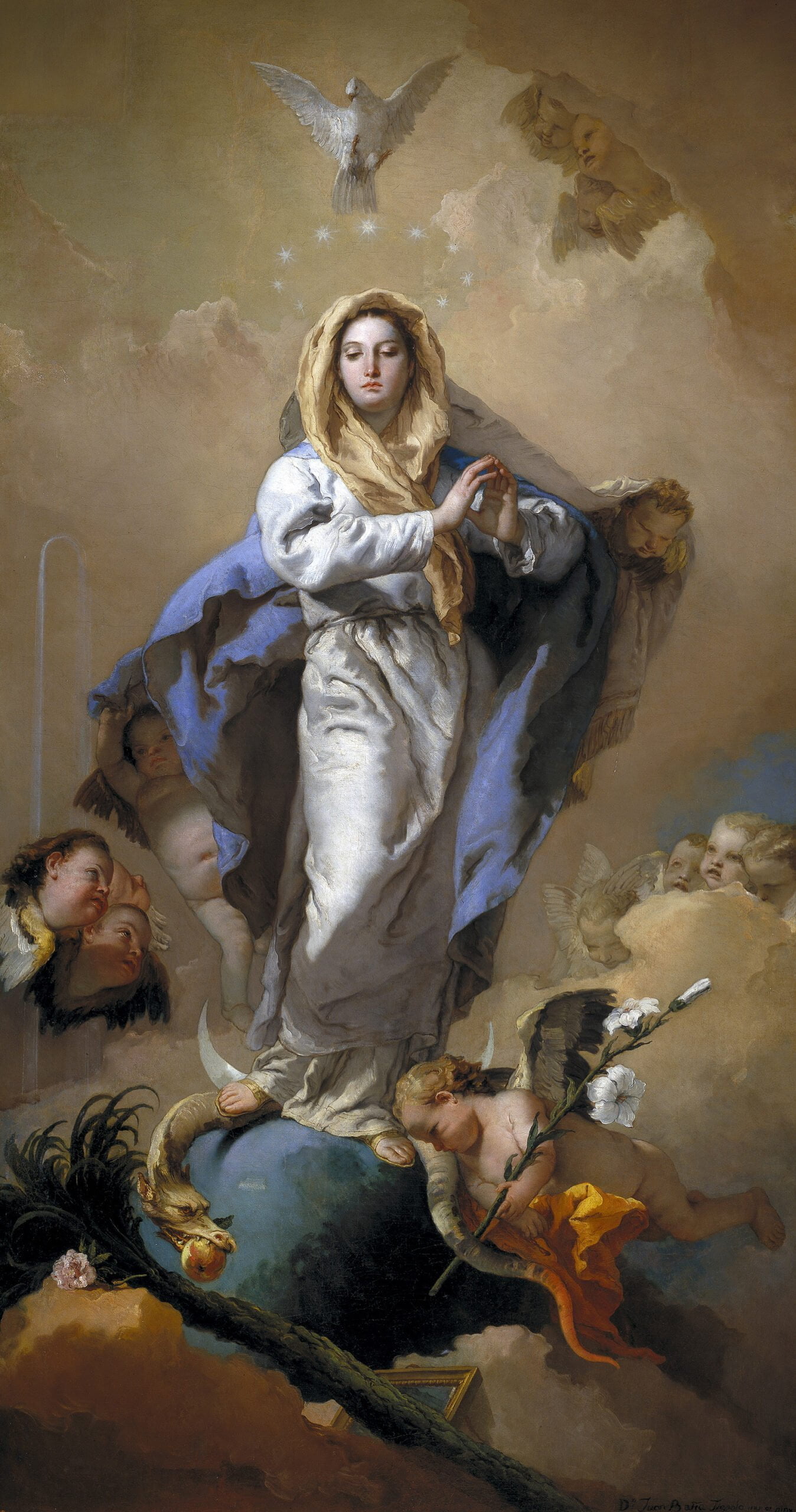
Nine months before the Nativity of Mary (September 8), the Church celebrates the Solemnity of the Immaculate Conception of the Blessed Virgin Mary. A feast approved in 1476 by Pope Sixtus IV and later established for the universal Church by Clement XI in 1708.
Gathering the secular doctrine of the Fathers and Doctors of the Church, the Councils and his predecessors, Pius IX solemnly proclaimed the Dogma of the Immaculate Conception in 1854: “We declare, pronounce, and define that the doctrine which holds that the most Blessed Virgin Mary, in the first instance of her conception, by a singular grace and privilege granted by Almighty God, in view of the merits of Jesus Christ, the Savior of the human race, was preserved free from all stain of original sin, is a doctrine revealed by God and therefore to be believed firmly and constantly by all the faithful” (Bull Ineffabilis Deus, 1854).
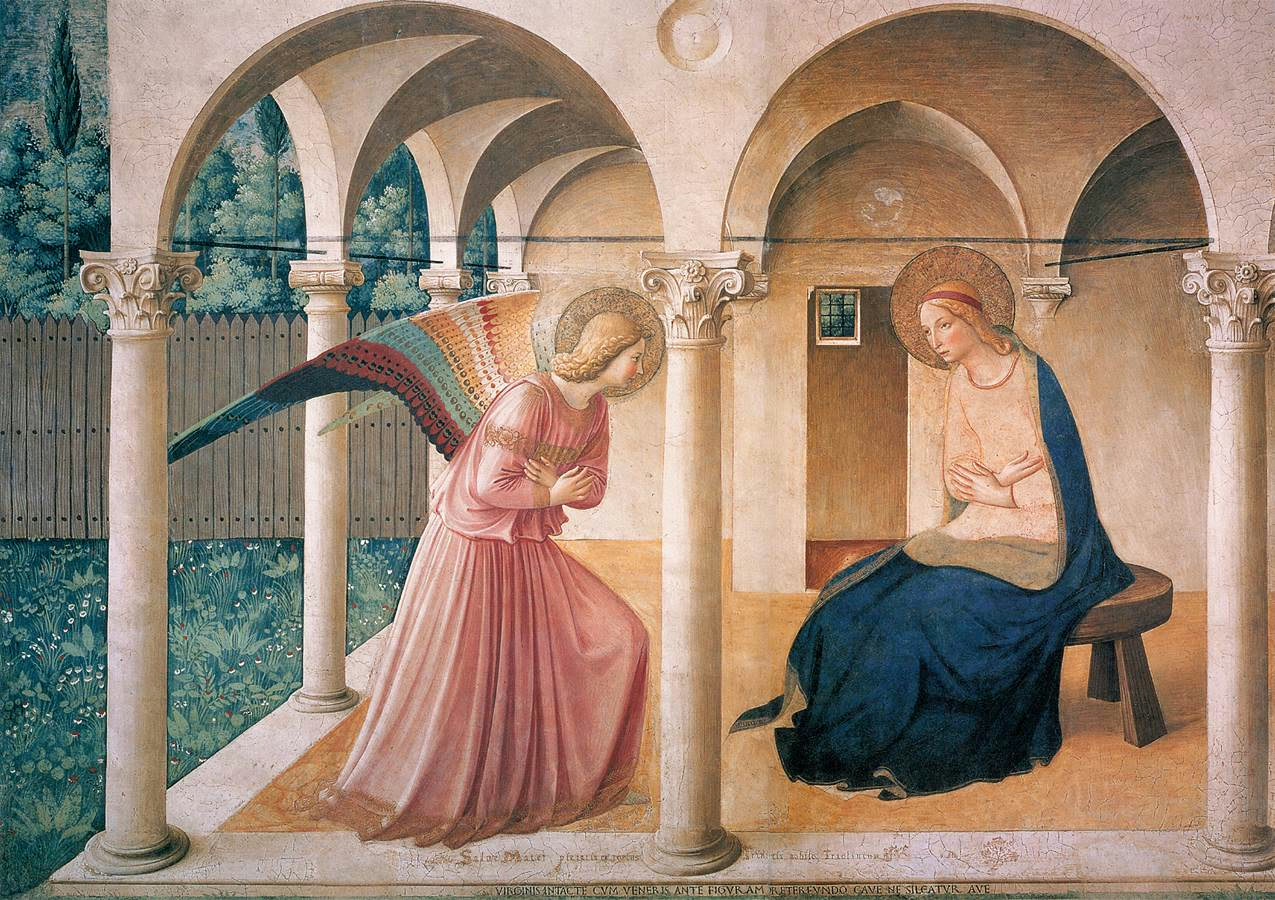
In that time, the angel Gabriel was sent from God to a city of Galilee named Nazareth, to a virgin betrothed to a man whose name was Joseph, of the house of David; and the virgin’s name was Mary. And he came to her and said, “Hail, full of grace, the Lord is with you!“
But she was greatly troubled at the saying, and tried to discern what sort of greeting this might be. And the angel said to her, “Do not be afraid, Mary, for you have found favor with God. And behold, you will conceive in your womb and bear a son, and you shall call his name Jesus. He will be great and will be called the Son of the Most High; and the Lord God will give to him the throne of his father David, and he will reign over the house of Jacob forever, and of his kingdom there will be no end.”
And Mary said to the angel, “How will this be, since I am a virgin?” And the angel answered her, “The Holy Spirit will come upon you, and the power of the Most High will overshadow you.
Therefore the child to be born will be called holy, the Son of God. And behold, your relative Elizabeth in her old age has also conceived a son, and this is the sixth month for her who was called barren; for nothing will be impossible with God.” And Mary said, “Behold, I am the handmaid of the Lord; let it be to me according to your word.” And the angel departed from her (Lk 1:26-38).
A Dream of Love
The Gospel text is prepared by the Letter to the Ephesians (1:3ff) which the liturgy proposes to us as the second reading. A hymn of praise, glory, and blessing that celebrates God’s “design” for humanity: “Blessed be the God and Father of our Lord Jesus Christ, who has blessed us in Christ with every spiritual blessing… He chose us in him… to be holy and blameless before him. In love he predestined us for adoption to himself as sons.” A dream, a project that finds its model in Mary: holy and immaculate.
A Shattered Dream
This dream was shattered by the sin of Adam and Eve, which the liturgy presents to us as the first reading. Against God’s dream, there is always the freedom of man and woman to say no.
Mary, the Recovery of the Dream
In Mary’s “yes,” God recovered the original dream and prepared the “ground” so that His only begotten Son Jesus could become man in the womb of a Woman. A “yes” that comes after a moment of hesitation and bewilderment, but which finally yields because to the Love that asks, one can only respond with a love that makes itself available. Mary, the full of grace, the all-beautiful, the all-pure, the all-holy: the beauty of God shines in her. She becomes the masterpiece of God’s love.
Like Her, All of Us
But “we are all predestined,” all filled with every blessing, all chosen to be holy and immaculate. The Virgin Mary, therefore, should not only be “admired” with tenderness and wonder, but she asks to be ” imitated” so that the beauty of God may shine upon the earth thanks to the many “yeses” that men and women today continue to pronounce, following her example and through the intercession of Mary, the Immaculate.
Prayer
Holy and Immaculate Virgin,
to You, who are the honor of our people
and the watchful guardian of our city,
we turn with confidence and love.
You are the All-Beautiful, O Mary!
Sin is not in You.
Arouse in all of us a renewed desire for holiness:
may the splendor of truth shine in our words,
may the song of charity resonate in our works,
may purity and chastity dwell in our body and heart,
may all the beauty of the Gospel be present in our lives.
You are the All-Beautiful, O Mary!
The Word of God was made flesh in You.
Help us to remain in attentive listening to the voice of the Lord:
may the cry of the poor never leave us indifferent,
may the suffering of the sick and those in need not find us distracted,
may the solitude of the elderly and the fragility of children move us,
may every human life be always loved and venerated by all of us.
You are the All-Beautiful, O Mary!
In You is the full joy of the blessed life with God.
Grant that we may not lose the meaning of our earthly journey:
may the gentle light of faith illuminate our days,
may the consoling strength of hope guide our steps,
may the contagious warmth of love animate our heart,
may the eyes of all of us remain firmly fixed there, on God, where true joy is found.
You are the All-Beautiful, O Mary!
Hear our prayer,
grant our supplication:
may the beauty of God’s merciful love in Jesus be in us,
may this divine beauty save us,
our city,
the whole world.
Amen.
(Pope Francis)
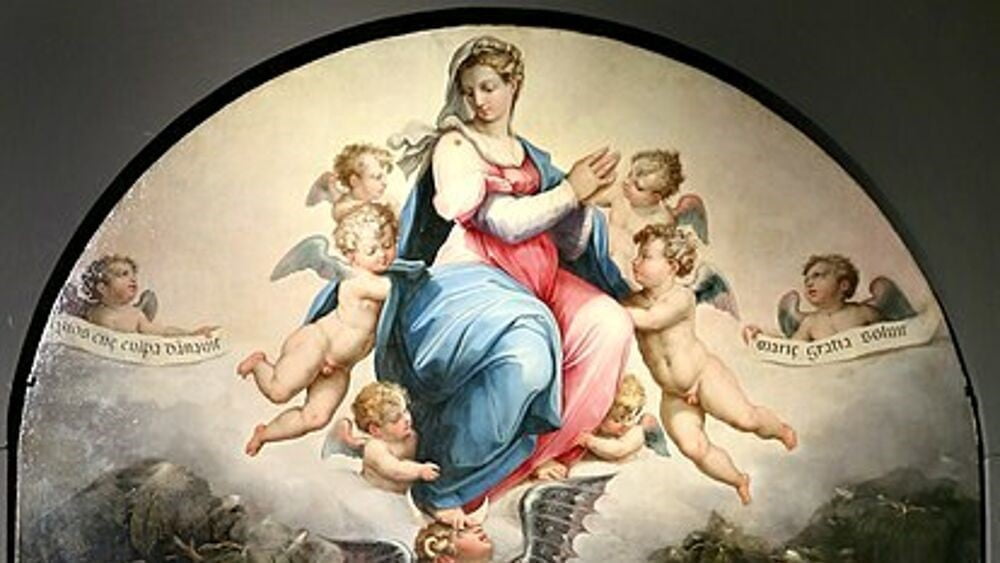
The Immaculate Conception is a Catholic dogma proclaimed by Blessed Pius IX (Giovanni Maria Mastai Ferretti, 1846-1878), on December 8, 1854, with the Bull “Ineffabilis Deus” which establishes that the Virgin Mary was preserved immune from original sin from the first instant of her conception:
« (…) we declare, pronounce, and define that the doctrine which holds that the most Blessed Virgin Mary, in the first instance of her conception, by a singular grace and privilege granted by Almighty God, in view of the merits of Jesus Christ, the Savior of the human race, was preserved free from all stain of original sin, is a doctrine revealed by God and therefore to be believed firmly and constantly by all the faithful. »
But the history of devotion to Mary Immaculate is much older. It precedes the proclamation of the dogma by centuries, indeed by millennia, which, as always, did not introduce a novelty, but simply crowned a very long tradition.
Already the Fathers of the Eastern Church, in exalting the Mother of God, had used expressions that placed her above original sin. They had called her: “Intemerate, blameless (in the sense of “without fault”), beauty of innocence, purer than the Angels, purest lily, cloud more splendid than the sun, Immaculate”.
In the West, however, the theory of immaculateness met with strong resistance, not out of aversion to the Madonna, who remained the most sublime of creatures, but to keep firm the doctrine of the Redemption, brought about only by virtue of the sacrifice of Jesus.
If Mary had been immaculate, that is, if she had been conceived by God outside the law of original sin, common to all the children of Eve, she would not have needed the Redemption, and this therefore could no longer be called universal. The exception, in this case, did not confirm the rule, but destroyed it.
The Franciscan John Duns, called Scotus because he was a native of Scotland, and nicknamed the “Subtle Doctor”, managed to overcome this doctrinal obstacle with a subtle but convincing distinction. The Madonna had also been redeemed by Jesus, but with a preventive Redemption, before and outside of time. She was preserved from original sin in view of the merits of her divine son. This was fitting, it was possible, and therefore it was done.
John Duns Scotus died in the early 14th century. After him, the doctrine of the Immaculate made great progress, and devotion to her spread more and more.
Since 1476, the feast of the Immaculate Conception of Mary was introduced into the Roman Calendar.
In 1830, the Virgin appeared (Rue du Bac in Paris) to Saint Catherine Labouré, asking for a medal to be minted, later called the “Miraculous Medal”, with the image of the Immaculate framed by the inscription «O Mary, conceived without sin, pray for us who have recourse to Thee » (Original: «Ô Marie conçue sans peché priez pour nous qui avons recours à Vous»).
This medal aroused intense devotion; many Bishops asked Rome for the definition of that dogma which was by then in the hearts of almost all Christians.
Thus, on December 8, 1854, Blessed Pius IX proclaimed Mary exempt from original sin, entirely pure, that is, Immaculate: it was an act of great faith and extreme courage that aroused joy among the faithful of the Madonna but indignation among the enemies of Christianity, as the dogma of the Immaculate was a direct contradiction of naturalists and materialists.
Four years later, the apparitions of Lourdes appeared as a prodigious confirmation of the dogma that had proclaimed the Virgin “all-beautiful”, “full of grace” and free from all stain of original sin. A confirmation that seemed like a thanksgiving, for the abundance of graces that poured out upon humanity from the heart of the Immaculate.
Tota pulchra es, Maria.
You are all beautiful, Mary,
and original sin
is not in you.
You are the glory of Jerusalem,
you are the joy of Israel,
you are the honor of our people,
you are the advocate of sinners.
O Mary! O Mary!
Most prudent Virgin,
Most clement Mother,
pray for us,
intercede for us
with the Lord Jesus Christ.