Convictions that become prisons
Commentary on the Sunday Gospel of December 14, 2025
Third Sunday of Advent – Year A (Gaudete)
Are you the one who is to come, or should we expect another?
From the Gospel according to Matthew
Mt 11:2-11
When John heard in prison what the Messiah was doing, he sent word by his disciples and said to him, “Are you the one who is to come, or should we expect another?” Jesus answered them, “Go and tell John what you hear and see: the blind receive their sight, the lame walk, the lepers are cleansed, the deaf hear, the dead are raised, and the poor have good news brought to them. And blessed is anyone who takes no offense at me.”
As they went away, Jesus began to speak to the crowds about John: “What did you go out into the wilderness to look at? A reed shaken by the wind? What then did you go out to see? A man dressed in soft robes? Look, those who wear soft robes are in royal palaces. What then did you go out to see? A prophet? Yes, I tell you, and more than a prophet. This is the one about whom it is written, ‘See, I am sending my messenger ahead of you, who will prepare your way before you.’
Truly I tell you, among those born of women no one has arisen greater than John the Baptist; yet the least in the kingdom of heaven is greater than he.”
The word of the Lord.
«Admire the things you see and tend to what you don’t see. Because of these things you see, you believe in the one you don’t see».
Sant’Agostino, Discorso 126, 2,3
Courage
In front of Cardinal Borromeo, who reproaches him for not having married Renzo and Lucia, Don Abbondio replies: “courage, one cannot give it to oneself.” Perhaps we too have remained there: faced with injustices, faced with our responsibilities, we convince ourselves that ultimately it is not our fault; the obstacles are too great and insurmountable. But even in the face of disappointments, when we do not feel understood, we are led to throw in the towel, we tell ourselves that it is not worth it. Discouragement is a characteristic trait of our time, but it is also a disavowal of God, it means giving up seeing his work in history.
Daring the Impossible
The liturgy of this Third Sunday of Advent invites us to look better, to look deeper, to rediscover courage. There is a path that opens up in the wasteland. God traces a road where it seems impossible (Is 35:8). It is precisely then that we recognize God’s style, when we realize that salvation comes from the unthinkable, precisely from where we did not expect it: “then the lame will leap like a deer” (Is 35:6).
For Israel, that holy way that opens up in the impossible is the way of return: while in exile, the people no longer see the land. Perhaps they dream of it, there is a desire, a nostalgic thought to drive away because it hurts. Instead, we are invited never to lose hope, but to imitate the farmer, who after sowing has only barren, grassless land before him (Jas 5:7). No sign speaks of life. But in his heart, the farmer already sees the flower, he desires it, he waits for it, he hopes. Hope makes us see what is not yet there. For this reason, those who hope are already in joy, because they see the work of God with the eyes of the heart.
Seeing or having an idea?
On this Sunday, in fact, Jesus insists on this action: seeing. To the Baptist’s disciples who question him about his identity, Jesus suggests they report what they see; to the people listening to him, Jesus asks what they went out to see in the wilderness.
In fact, many times our life depends on how we look: do we really look at how things are? Very often we form our own idea, a word that not by chance comes from the Greek verb to see.
Ideas or Idols?
The idea is an interior vision that often replaces authentic seeing: we no longer see because we are occupied by our ideas, we take them for granted. And many times these ideas are not only false, but they are also ideas that depress us, that poison us.
When we no longer look at reality, when we no longer see those around us, when we no longer recognize the mistakes we are making, when we no longer look at the way we are treating others, we have made our ideas our idols.
Our ideas dominate and orient our life, we adore them, we suffer for them, but reality lies elsewhere and above all we no longer see what God is working in our history.
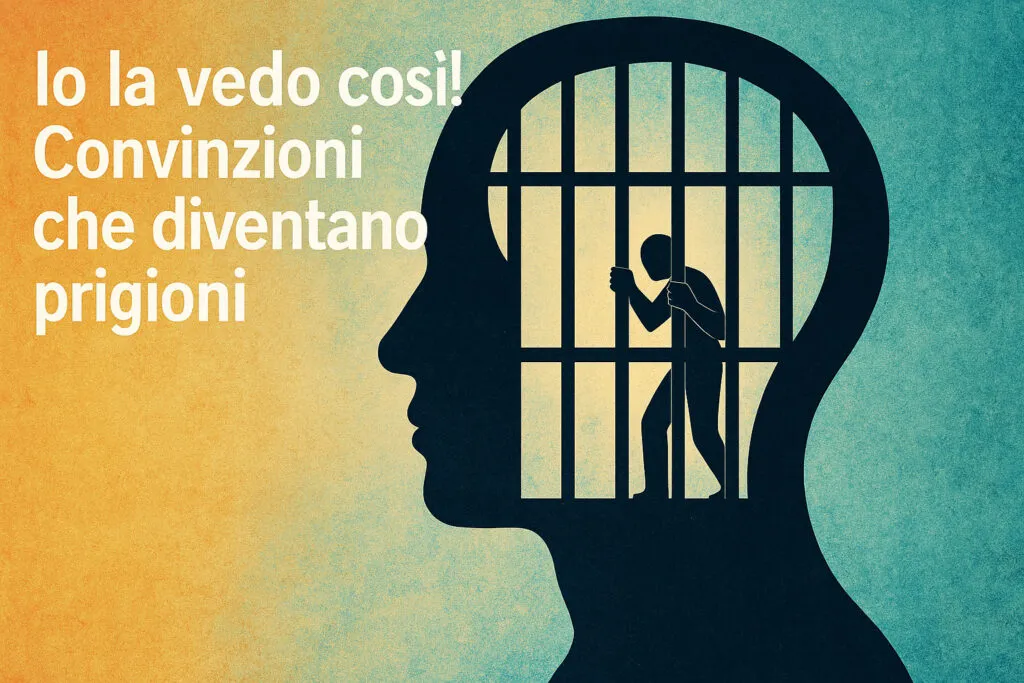
The Prison of Convictions
Even John the Baptist must escape from his idea of God. John, in this page of the Gospel, is in prison, but it seems that the real prison, the most dangerous one, is another: it is the prison of ideas, of convictions. If John had not tried to escape from the interior prison of his convictions about God, he would never have met the Messiah.
John, moreover, is also capable of allowing himself to be helped: finding himself in prison, he sends others to ask, that is, to see, to become aware of the reality of God. But sometimes we are so proud that we don’t even let ourselves be helped and prefer to remain closed in the prison of our ego.
Allowing Ourselves to be Surprised
No matter how much we contemplate the action of God, we will never be able to fully know him: God transcends us, he eludes us, he is always beyond, he cannot be com-prehended: si comprehendis non est Deus, said Saint Augustine. The joy before the work of God consists then in looking, allowing ourselves to be surprised, indeed allowing ourselves to be freed from self-referential ideas, which very often constitute the bars of our inner prison.
Reading within ourselves
- Are you discouraged (or do you tend to get discouraged) and find it hard to hope?
- Can you ask the Lord to free you from your prejudices so that you may see God’s work in your life?
Per gentile concessione © ♥ Padre Gaetano Piccolo SJ
Let’s listen together