

Finding a Way to Live
Commentary on the Gospel of the day December 7, 2025
Second Sunday of Advent – Year A
Repent, for the kingdom of heaven is near!
From the Gospel according to Matthew
Mt 3:1-12
In those days John the Baptist came, preaching in the wilderness of Judea and saying, “Repent, for the kingdom of heaven is near!” This is he who was spoken of through the prophet Isaiah: “A voice of one calling in the wilderness, ‘Prepare the way for the Lord, make straight paths for him.’”
John’s clothes were made of camel’s hair, and he had a leather belt around his waist. His food was locusts and wild honey. People went out to him from Jerusalem and all Judea and the whole region of the Jordan. Confessing their sins, they were baptized by him in the Jordan River.
But when he saw many of the Pharisees and Sadducees coming to where he was baptizing, he said to them, “You brood of vipers! Who warned you to flee from the coming wrath? Produce fruit in keeping with repentance. And do not think you can say to yourselves, ‘We have Abraham as our father.’ For I tell you that out of these stones God can raise up children for Abraham. The ax is already at the root of the trees, and every tree that does not produce good fruit will be cut down and thrown into the fire. I baptize you with water for repentance. But after me comes one who is more powerful than I, whose sandals I am not worthy to carry. He will baptize you with the Holy Spirit and fire. His winnowing fork is in his hand, and he will clear his threshing floor, gathering his wheat into the barn and burning up the chaff with unquenchable fire.”
The Word of the Lord.
So what does it mean: Convert to me?
Not sure that you, facing west,
It turns to the east.
It’s too easy.
I wish you would do the same thing inside yourself!
But this is not easy.
You turn the body from one direction to another;
Well, direct your heart from one love to another
Saint Augustine, Speech 130/A, 12
The Change
Changing is not easy. While change fascinates us, it usually also arouses fear and unease. We tend to remain in our comfort zones even when we realize we are not well: we prefer a secure habit rather than an unknown novelty.
However, change is part of life, and in some cases, resisting change means dying. The first step, therefore, to flourish is to welcome the possibility, to recognize what needs to be changed: “what you resist,” Jung said, “persists; what you accept, on the other hand, can be changed.” We often spend our lives defending ourselves instead of walking the path that opens before us.
Closeness
The readings for this Second Sunday of Advent also speak to us of change and possibility. John the Baptist, in fact, invites us to change our way of thinking: repent (metanoeite)! And this invitation has a reason: we do not change for the sake of changing, but to open ourselves up to novelty, to make room for someone who wants to come into our life to make it more beautiful: “The Kingdom of God is near!”
With the expression “kingdom of God,” Matthew indicates God himself. He is near. And this closeness is not just temporal, but relational. It is temporal in the sense that at every moment God comes into our life in many ways: Saint Bernard spoke of three comings of the Lord, that in the flesh, that at the end of time, and that in the Spirit, because Christ continues to reach us in the heart.
The closeness is also relational, because God is telling us, just as we would say to a friend or a person who is suffering: “I am close to you,” I am in your life, I feel what you are experiencing, I want to accompany you. This closeness is the reason for change.
Starting with Me
John the Baptist, as a true prophet, lives this change first and foremost in his own life. His actions are revolutionary. They are acts of rupture. He distances himself from the places of power: to proclaim the Kingdom, he does not place himself in the visible spaces of the Temple, but hides in the desert. What must resonate is the Word in the voice.
John makes his revolution by stripping off the priestly robes, to which he was entitled as the son of Zechariah. He strips himself of the role, because otherwise he could not authentically speak of change. He would risk repeating the hypocrisy of the Pharisees. If we want to give strength to our message, we must always ask ourselves first of all what our life is saying.
A New Beginning
John also withdraws into the desert because that had been the fundamental experience of Israel. The desert recalls the arid land of the adamah, of creation: it is about starting anew. He begins to baptize at the Jordan, which in the memory of Israel was the place of entry into the promised land: now the people are faced with a new beginning, but as it continues to happen today, we are not always capable of seeing it.
Change always involves risks: those who claim to have everything clear from the beginning generally do not undertake any path of change. Even the Baptist does not understand everything. He will realize that he has not understood everything about God. Some things will disturb him, challenge him, he will have to ask, he will have to continue to change.
Authenticity
Sometimes we risk facing our demands for change in a very simplistic way. True change does not come cheap: people actually go to John, but he rebukes them. Why? We can intuit that perhaps the people who flocked to him had not developed a genuine desire for change; perhaps it was only superficial, a wishful desire, a fad; perhaps many people were going to the Jordan and many found themselves there by chance. Conversion is a deep and conscious maturation of a real change.
The Paradox
Change sometimes takes on paradoxical features; it seems impossible to us; we stop before what reasonably seems unthinkable. Isaiah proposes precisely paradoxical images to us this Sunday: the wolf with the lamb, the leopard with the goat, the calf with the lion cub… an infant playing with snakes! The impossible is always the sign of God’s presence.
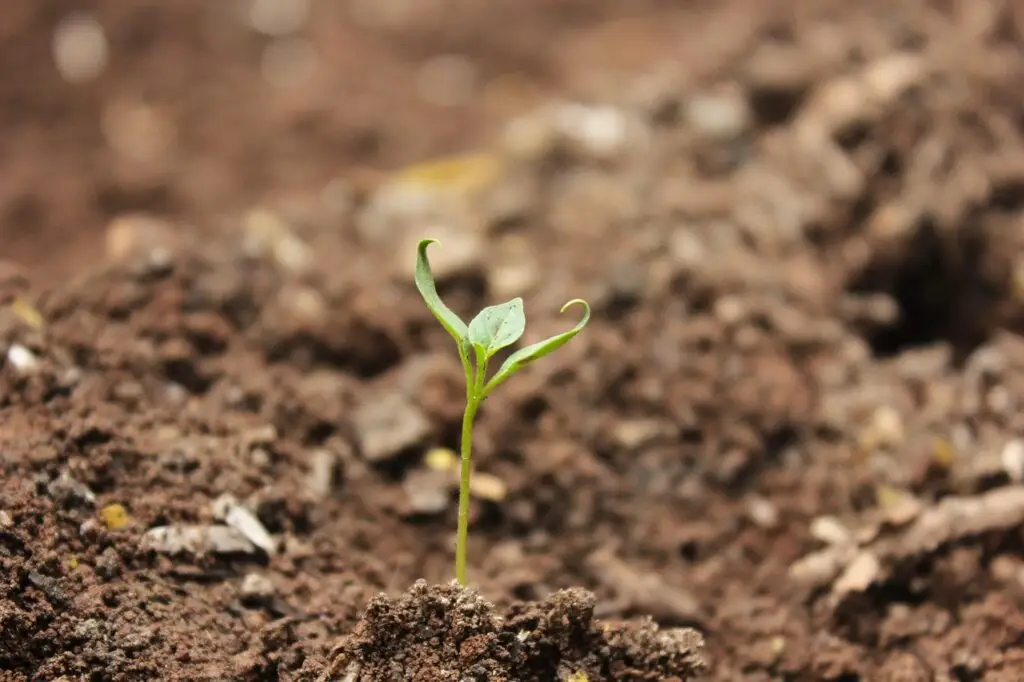
Faced with many relationships, with many painful events, we no longer expect anything, because rationally a change, a reconciliation, a novelty would be unthinkable. Today Isaiah continues to invite us to believe in the power of God: our salvation is in a small shoot, defenseless, exposed to the elements. To convert means to open the mind and heart to this novelty of God that seems, understandably, paradoxical and impossible!
Reading Within
- Where do you feel the Lord is calling you to a change?
- What are your ways of thinking that hinder your conversion?
Let’s Listen Together


🍝 La Pasta che fa bene al cuore
Partecipa alla Seconda Edizione del nostro evento di solidarietà.
Unisciti a noi per trasformare un piatto di pasta in un gesto d’amore ❤️